
 United States · English
 Pilipinas · Filipino


Stone asset care · professional programme
Granite
Exteriors, walkways, stairs and kitchen approaches
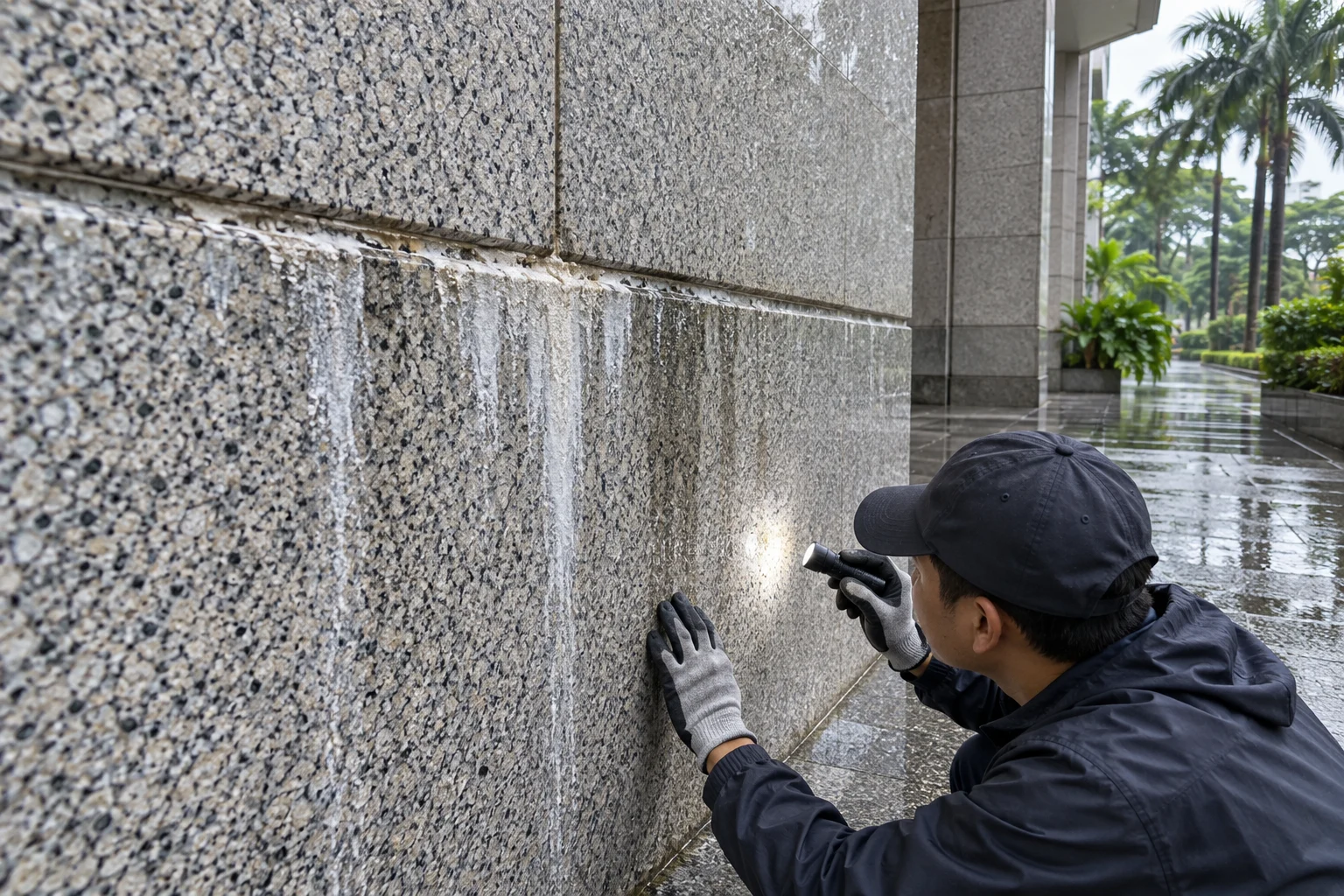
Understand the material first
Polished, flamed and sandblasted finishes retain soil differently and need different tools. Granite is not universally acid-safe.
Recommended workflow
Begin with neutral cleaning. For textured finishes, consider a nylon brush and wastewater recovery; record joint and edge defects.
Do not use hydrofluoric-acid chemistry on granite. High-pressure water can damage weak joints, fillers and edges.
Site survey checklist
- Obtain trade name, installation drawings and manufacturer or supplier material information
- Record polished, honed or textured finish, resin fillers, wax and protection history
- Check water sources, sealants, joints, drainage, sunlight, substrate moisture and traffic
- Compare before the trial and after full drying under the same lighting; keep photographs
Product families to assess
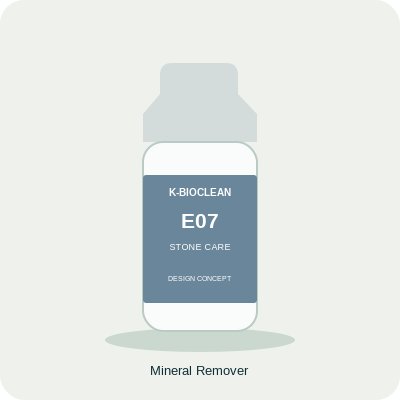
K-STONE E07
Mineral Remover
Efflorescence and cement-residue treatment for confirmed compatible surfaces
View product family →
Set dilution, dwell time, tools and coverage only after checking the final label, TDS, SDS and material compatibility. The product families on this site include development and supply proposals that are not yet finalized.
Maintenance and handover criteria
Check grit entry, spill response, rinsing and drying routinely. Select new protection after addressing soil and moisture causes. Agree pre-existing defects before work and review remaining colour, gloss and joints together at handover.
View maintenance and training →References and scope
These institutional and manufacturer references inform general care principles and existing technology. They do not establish certification, equivalent performance or affiliation for our proposals. Reviewed: 2026-10-12.